


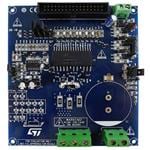
STEVAL-IPMNM2S
STMicroelectronics
Power Management IC Development Tools 100 W motor control power board based on STIPNS2M50T-H SLLIMM -nano (SMD) IPM
| Distributor | SKU | Stock | MOQ | 1 | 10 | 50 | 100 | 1,000 | 10,000 |
|---|---|---|---|---|---|---|---|---|---|
| DigiKey | 497-18328-ND | 0 | 1 | $79.79 | $79.79 | $79.79 | $79.79 | $79.79 | $79.79 |
| AVNET Europe | STEVAL-IPMNM2S | 3 | 1 | * $225.81 | * $209.45 | * $160.36 | * $145.30 | * $145.30 | * $145.30 |
| AVNET Express | STEVAL-IPMNM2S | 5 | 1 | $0.00 | $0.00 | $0.00 | $0.00 | $0.00 | $0.00 |
| element14 APAC | STEVAL-IPMNM2S | 2 | 1 | * $86.70 | * $86.70 | * $86.70 | * $86.70 | * $86.70 | * $86.70 |
| Farnell | STEVAL-IPMNM2S | 2 | 1 | * $80.96 | * $80.96 | * $80.96 | * $80.96 | * $80.96 | * $80.96 |
| Future Electronics | STEVAL-IPMNM2S | 1 | 1 | $88.20 | |||||
| Mouser Electronics | 511-STEVAL-IPMNM2S | 0 | 1 | $75.40 | $75.40 | $75.40 | $75.40 | $75.40 | $75.40 |
| Newark | STEVAL-IPMNM2S | 2 | 1 | $93.20 | $93.20 | $93.20 | $93.20 | $93.20 | $93.20 |
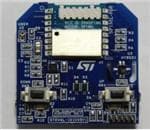
| Distributor | SKU | Stock | MOQ | 1 | 10 | 50 | 100 | 1,000 | 10,000 |
|---|---|---|---|---|---|---|---|---|---|
| DigiKey | 497-16376-ND | 49 | 1 | $27.50 | $27.50 | $27.50 | $27.50 | $27.50 | $27.50 |
| Ameya360 | STEVAL-IDI005V1 | 0 | $35.75 | $35.75 | $35.75 | $35.75 | $35.75 | $35.75 | |
| Arrow North American Components | STEVAL-IDI005V1 | 0 | 1 | ||||||
| AVNET Europe | STEVAL-IDI005V1 | 0 | 1 | * $0.00 | * $0.00 | * $0.00 | * $0.00 | * $0.00 | * $0.00 |
| AVNET Express | STEVAL-IDI005V1 | 0 | 1 | $0.00 | $0.00 | $0.00 | $0.00 | ||
| element14 APAC | STEVAL-IDI005V1 | 24 | 1 | * $32.81 | * $32.81 | * $32.81 | * $32.81 | * $32.81 | * $32.81 |
| Farnell | STEVAL-IDI005V1 | 21 | 1 | * $23.39 | * $23.39 | * $23.39 | * $23.39 | * $23.39 | * $23.39 |
| Future Electronics | STEVAL-IDI005V1 | 10 | 1 | $26.25 | |||||
| Mouser Electronics | 511-STEVAL-IDI005V1 | 22 | 1 | $28.60 | $28.60 | $28.60 | $28.60 | $28.60 | $28.60 |
| Newark | STEVAL-IDI005V1 | 33 | 23 | $0.00 | $0.00 | $0.00 | $0.00 | $0.00 | $0.00 |
| Rutronik | STEVAL-IDI005V1 | 3 | 1 | $29.19 |

AD9219-65KITZ
Analog Devices Inc.
The AD9219 is a quad, 10-bit, 40/65 MSPS analog-to-digital con-verter (ADC) with an on-chip sample-and-hold circuit designedfor low cost, low power, small size, and ease of use. The productoperates at a conversion rate of up to 65 MSPS and is optimized foroutstanding dynamic performance and low power in applications where a small package size is critical.The ADC requires a single 1.8 V power supply and LVPECL-/ CMOS-/LVDS-compatible sample rate clock for full performanceoperation. No external reference or driver components arerequired for many applications.The ADC automatically multiplies the sample rate clock for theappropriate LVDS serial data rate. A data clock output (DCO) for capturing data on the output and a frame clock output (FCO) for signaling a new output byte are provided. Individual-channel power-down is supported and typically consumes less than 2 mW when all channels are disabled.The ADC contains several features designed to maximizeflexibility and minimize system cost, such as programmableclock and data alignment and programmable digital test patterngeneration. The available digital test patterns include built-in deterministic and pseudorandom patterns, along with custom user- defined test patterns entered via the serial port interface (SPI).The AD9219 is available in an RoHS compliant, 48-lead LFCSP. It is specified over the industrial temperature range of ?40?C to +85?C.Product Highlights Small Footprint. Four ADCs are contained in a small, space-saving package. Low power of 94 mW/channel at 65 MSPS. Ease of Use. A data clock output (DCO) is provided that operates at frequencies of up to 390 MHz and supports double data rate (DDR) operation. User Flexibility. The SPI control offers a wide range of flexible features to meet specific system requirements. Pin-Compatible Family. This includes the AD9287 (8-bit), AD9228 (12-bit), and AD9259 (14-bit). ApplicationsMedical imaging and nondestructive ultrasoundPortable ultrasound and digital beam-forming systemsQuadrature radio receiversDiversity radio receiversTape drivesOptical networkingTest equipment
| Distributor | SKU | Stock | MOQ | 1 | 10 | 50 | 100 | 1,000 | 10,000 |
|---|---|---|---|---|---|---|---|---|---|
| Mouser Electronics | N/A | 0 |
 Manufacturer Page
AD9231-80EBZ
Analog Devices Inc.
The AD9231 is a monolithic, dual-channel, 1.8 V supply, 12-bit, 20 MSPS / 40?MSPS / 65 MSPS/80 MSPS analog-to-digital converter (ADC). It features a high performance sample-and-hold circuit and on-chip voltage reference.The product uses multistage differential pipeline architecture with output error correction logic to provide 12-bit accuracy at 80 MSPS data rates and to guarantee no missing codes over the full operating temperature range.The ADC contains several features designed to maximize flexibility and minimize system cost, such as programmable clock and data alignment and programmable digital test pattern generation. The available digital test patterns include built-in deterministic and pseudorandom patterns, along with custom user-defined test patterns entered via the serial port interface (SPI).A differential clock input controls all internal conversion cycles. An optional duty cycle stabilizer (DCS) compensates for wide variations in the clock duty cycle while maintaining excellent overall ADC performance.The digital output data is presented in offset binary, gray code, or twos complement format. A data output clock (DCO) is provided for each ADC channel to ensure proper latch timing with receiving logic. Both 1.8 V and 3.3 V CMOS levels are supported, and output data can be multiplexed onto a single output bus.The AD9231 is available in a 64-lead RoHS compliant LFCSP and is specified over the industrial temperature range (?40?C to +85?C).PRODUCT HIGHLIGHTS The AD9231 operates from a single 1.8 V analog power supply and features a separate digital output driver supply to accommodate 1.8 V to 3.3 V logic families. The patented sample-and-hold circuit maintains excellent performance for input frequencies up to 200 MHz and is designed for low cost, low power, and ease of use. A standard serial port interface supports various product features and functions, such as data output formatting, internal clock divider, power-down, DCO/DATA timing and offset adjustments, and voltage reference modes. The AD9231 is packaged in a 64-lead RoHS compliant LFCSP that is pin compatible with the AD9268 16-bit ADC, the AD9258 14-bit ADC, the AD9251 14-bit ADC, and the AD9204 10-bit ADC, enabling a simple migration path between 10-bit and 16-bit converters sampling from 20 MSPS to 125 MSPS.?APPLICATIONS Communications Diversity radio systems Multimode digital receivers GSM, EDGE, W-CDMA, LTE, CDMA2000, WiMAX, TD-SCDMA I/Q demodulation systems Smart antenna systems Battery-powered instruments Hand held scope meters Portable medical imaging Ultrasound Radar/LIDAR
| Distributor | SKU | Stock | MOQ | 1 | 10 | 50 | 100 | 1,000 | 10,000 |
|---|---|---|---|---|---|---|---|---|---|
| Mouser Electronics | N/A | 0 |

AD9258-125EBZ
Analog Devices Inc.
The AD9258 is a dual, 14-bit, 80 MSPS/105 MSPS/125 MSPS analog-to-digital converter (ADC). The AD9258 is designed to support communications applications where high performance, combined with low cost, small size, and versatility, is desired.The dual ADC core features a multistage, differential pipelined architecture with integrated output error correction logic. Each ADC features wide bandwidth differential sample-and-hold analog input amplifiers that support a variety of user-selectable input ranges. An integrated voltage reference eases design considerations. A duty cycle stabilizer is provided to compensate for variations in the ADC clock duty cycle, allowing the converters to maintain excellent performance.The ADC output data can be routed directly to the two external 14-bit output ports. These outputs can be set to either 1.8 V CMOS or LVDS.Flexible power-down options allow significant power savings, when desired.Programming for setup and control is accomplished using a 3-wire SPI-compatible serial interface.The AD9258 is available in a 64-lead LFCSP and is specified over the industrial temperature range of ?40?C to +85?C.PRODUCT HIGHLIGHTS On-chip dither option for improved SFDR performance with low power analog input. Proprietary differential input that maintains excellent SNR performance for input frequencies up to 300 MHz. Operation from a single 1.8 V supply and a separate digital output driver supply accommodating 1.8 V CMOS or LVDS outputs. Standard serial port interface (SPI) that supports various product features and functions, such as data formatting (offset binary, twos complement, or gray coding), enabling the clock DCS, power-down, test modes, and voltage reference mode. Pin compatibility with the AD9268, allowing a simple migration from 14 bits to 16 bits. The AD9258 is also pin compatible with the AD9251, AD9231, and AD9204 family of products for lower sample rate, low power applications.APPLICATIONS Communications Diversity radio systems Multimode digital receivers (3G) GSM, EDGE, W-CDMA, LTE, CDMA2000, WiMAX, TD-SCDMA I/Q demodulation systems Smart antenna systems General-purpose software radios Broadband data applications Ultrasound Equipment
| Distributor | SKU | Stock | MOQ | 1 | 10 | 50 | 100 | 1,000 | 10,000 |
|---|---|---|---|---|---|---|---|---|---|
| Mouser Electronics | N/A | 0 |

AD9259-50KITZ
Analog Devices Inc.
The AD9259 is a quad, 14-bit, 50 MSPS analog-to-digital converter (ADC) with an on-chip sample-and-hold circuit designed for low cost, low power, small size, and ease of use. The product operates at a conversion rate of up to 50 MSPS and is optimized for outstanding dynamic performance and low power in applications where a small package size is critical.The ADC requires a single 1.8 V power supply and LVPECL-/ CMOS-/LVDS-compatible sample rate clock for full performance operation. No external reference or driver components are required for many applications.The ADC automatically multiplies the sample rate clock for the appropriate LVDS serial data rate. A data clock output (DCO) for capturing data on the output and a frame clock output (FCO) for signaling a new output byte are provided. Individual-channel power-down is supported and typically consumes less than 2 mW when all channels are disabled.The ADC contains several features designed to maximize flexibility and minimize system cost, such as programmable clock and data alignment and programmable digital test pattern generation. The available digital test patterns include built-in deterministic and pseudorandom patterns, along with custom user-defined test patterns entered via the serial port interface (SPI).The AD9259 is available in a RoHS compliant, 48-lead LFCSP. It is specified over the industrial temperature range of ?40?C to +85?C.PRODUCT HIGHLIGHTSSmall Footprint. Four ADCs are contained in a small, space-saving package.Low power of 98 mW/channel at 50 MSPS.Ease of Use. A data clock output (DCO) operates at frequencies of up to 350 MHz and supports double data rate (DDR) operation.User Flexibility. The SPI control offers a wide range of flexible features to meet specific system requirements.Pin-Compatible Family. This includes the AD9287 (8-bit), AD9219 (10-bit), and AD9228 (12-bit).APPLICATIONSMedical imaging and nondestructive ultrasoundPortable ultrasound and digital beam-forming systemsQuadrature radio receiversDiversity radio receiversTape drivesOptical networkingTest equipment
| Distributor | SKU | Stock | MOQ | 1 | 10 | 50 | 100 | 1,000 | 10,000 |
|---|---|---|---|---|---|---|---|---|---|
| Mouser Electronics | N/A | 0 |

AD9572-EVALZ-LVD
Analog Devices Inc.
The AD9572 provides a multioutput clock generator function along with two on-chip PLL cores, optimized for fiber channel line card applications that include an Ethernet interface. The integer-N PLL design is based on the Analog Devices, Inc., proven portfolio of high performance, low jitter frequencysynthesizers to maximize network performance. Other applications with demanding phase noise and jitter requirements also benefit from this part. The PLL section consists of a low noise phase frequency detector (PFD), a precision charge pump (CP), a low phase noise voltage controlled oscillator (VCO), and a preprogrammed feedback divider and output divider. By connecting an external crystal or reference clock to the REFCLK pin, frequencies up to 156.25 MHz can be locked to the input reference. Each output divider and feedback divider ratio is preprogrammed for therequired output rates. A second PLL also operates as an integer-N synthesizer anddrives two LVPECL or LVDS output buffers for 106.25 MHzoperation. No external loop filter components are required, thusconserving valuable design time and board space. The AD9572 is available in a 40-lead, 6 mm ? 6 mm lead framechip scale package (LFCSP) and can be operated from a single3.3 V supply. The temperature range is ?40?C to +85?C.APPLICATIONSFiber channel line cards, switches, and routersGigabit Ethernet/PCIe support included Low jitter, low phase noise clock generation
| Distributor | SKU | Stock | MOQ | 1 | 10 | 50 | 100 | 1,000 | 10,000 |
|---|---|---|---|---|---|---|---|---|---|
| Mouser Electronics | N/A | 0 |

AD9575-EVALZ-LVD
Analog Devices Inc.
The AD9575 provides a highly integrated, dual output clockgenerator function including an on-chip PLL core that isoptimized for network clocking. The integer-N PLL design isbased on the Analog Devices, Inc., proven portfolio of high performance, low jitter frequency synthesizers to maximize linecard performance. Other applications with demanding phasenoise and jitter requirements also benefit from this part.The PLL section consists of a low noise phase frequency detector (PFD), a precision charge pump, a low phase noise voltagecontrolled oscillator (VCO), and pin selectable feedback and output dividers.By connecting an external crystal, popular network output frequencies can be locked to the input reference. The output divider and feedback divider ratios are pin programmable for therequired output rates. No external loop filter components are required, thus conserving valuable design time and board space.The AD9575 is available in a 16-lead, 4.4 mm ? 5.0 mm TSSOP and can be operated from a single 3.3 V supply. The temperature range is ?40?C to +85?C. APPLICATIONS GbE/FC/SONET line cards, switches, and routers CPU/PCI-E applications Low jitter, low phase noise clock generation
| Distributor | SKU | Stock | MOQ | 1 | 10 | 50 | 100 | 1,000 | 10,000 |
|---|---|---|---|---|---|---|---|---|---|
| Mouser Electronics | N/A | 0 |

ADA4432-1BCP-EBZ
Analog Devices Inc.
The ADA4432-1 is a single-ended output fully integrated video reconstruction filter that combines overvoltage protection (short-to-battery [STB] protection) and short-to-ground (STG) protection on the outputs, with excellent video specifications and low power consumption. The combination of STB protection and robust ESD tolerance allows the ADA4432-1 to provide superior protection in the hostile automotive environment.The ADA4432-1 is a single-ended input/single-ended output video filter capable of driving long back-terminated cables.The short-to-battery protection integrated into the ADA4432-1 protects against both dc and transient overvoltage events, caused by an accidental short to a battery voltage up to 18 V. The Analog Devices, Inc., short-to-battery protection eliminates the need for large output coupling capacitors and other complicated circuits used to protect standard video amplifiers, saving space and cost.The ADA4432-1 features a high-order filter with ?3 dB cutoff frequency response at 10 MHz and 45 dB of rejection at 27 MHz. The ADA4432-1 features an internally fixed gain of 2 V/V. This makes the ADA4432-1 ideal for SD video applications, including NTSC and PAL.The ADA4432-1 operatea on single supplies as low as 2.6 V and as high as 3.6 V while providing the dynamic range required by the most demanding video systems.The ADA4432-1 is offered in an 8-lead, 3 mm ? 3 mm LFCSP package and a 6-lead SOT-23 package. It is rated for operation over the wide automotive temperature range of ?40?C to +125?C.Appplications Automotive rearview cameras Automotive video electronic control units (ECUs) Surveillance video systems
| Distributor | SKU | Stock | MOQ | 1 | 10 | 50 | 100 | 1,000 | 10,000 |
|---|---|---|---|---|---|---|---|---|---|
| Mouser Electronics | 584-ADA4432-1BCP-EBZ | 0 | 1 |

ADMV4928-EVALZ
Analog Devices Inc.
The ADMV4928 is a silicon on insulator (SOI), 37.0 GHz to 43.5 GHz, mmW 5G beamformer. The RF integrated circuit (RFIC) is highly integrated and contains 16 independent transmit and receive channels. The ADMV4928 supports eight horizontal and eight vertical polarized antennas via independent RFV and RFH input/outputs.In transmit mode, both the RFV input and RFH input signals feed into separate amplifiers. Each path after the amplifiers splits into eight independent channels via the 1:8 power splitters. In receive mode, input signals pass through either the vertical or horizontal receive channels and combine via two independent 8:1 combiners to the common RFV pin or RFH pin. In either mode, each transmit and receive channel includes a vector modulator (VM) to control the phase, and two digital variable gain amplifiers (DVGAs) to control the amplitude. The VM provides a full 360? phase adjustment range in either transmit or receive mode to provide 6 bits of resolution for 5.625? phase steps. A phase step policy for the transmit and receive VM is provided to ensure optimum phase step performance. The total DVGA dynamic range in transmit mode is 34.5, which provides 6 bits of resolution that results in 0.5 dB amplitude steps and 5 bits of resolution that results in 1 dB amplitude steps. In receive mode, the total dynamic range is 28 dB, which provides 5 bits of resolution that results in 0.5 dB amplitude steps and 5 bits of resolution that results in 1 dB amplitude steps. The DVGAs provide a flat phase response across the full gain range. A gain policy for DVGA1 and DVGA2 is provided in the AN-2074 Application Note, ADMV4928 Application Note to ensure optimized performance across the attenuation range with 0.5 dB step resolution from 0 dB to 34.5 dB attenuation for transmit mode and 0.5 dB step resolution from 0 dB to 28 dB attenuation for receive mode. The transmit channels contain individual transmit power detectors to detect either modulated or continuous wave signals to calibrate for each channel gain as well as channel to channel gain mismatch. Each receive channel contains an RF power overload circuit (receive channel overload detection circuit) to prevent potential damage to the device as a result of blocker instances. The ADMV4928 RF ports can be connected directly to a patch antenna to create a dual polarization mmW 5G subarray.The ADMV4928 can be programmed using a 3-wire or 4-wire serial port interface (SPI). An integrated, on-chip low dropout (LDO) voltage regulator generates the 1.0 V supply for the SPI circuitry to reduce the number of supply domains required. Various SPI modes are available to enable fast startup and control during normal operation. The amplitude and phase for each channel can be set individually or multiple channels can be programmed simultaneously using the on-chip memory for beamforming. The on-chip memory can store up to 2048 beam positions that can be allocated for either transmit mode or receive mode for the horizontal channels and vertical channels. On-chip nonvolatile memory (NVM) is used to store the calibrated gain and phase offset coefficients and the reference values for each individual channel from the factory. These values are used to perform channel to channel or chip to chip calibration. In addition, four address pins (CHIP_ADDx) allow independent SPI control of up to 16 devices on the same serial lines. To control multiple devices via the same serial lines with the same instructions, activate broadcast mode via the external enable pin (BR_EN). Dedicated horizontal and vertical polarization load pins (LOAD_V and LOAD_H) provide the synchronization of all devices in the same array. A horizontal and vertical polarization transmit mode and receive mode control pin (TRX_H or TRX_V) is provided for fast switching between transmit mode and receive mode.The ADMV4928 comes in a compact, 239-ball, 10 mm ? 7 mm chip scale package ball grid array (CSP_BGA). The ADMV4928 operates over the ?40?C to +95?C case temperature (TC) range. This CSP_BGA package enables the ability to heatsink the ADMV4928 from the topside of the package for the most efficient thermal heatsinking and to allow flexible antenna placement on the opposite side of the printed circuit board (PCB).APPLICATIONSmmW 5G applicationBroadband communication
| Distributor | SKU | Stock | MOQ | 1 | 10 | 50 | 100 | 1,000 | 10,000 |
|---|---|---|---|---|---|---|---|---|---|
| Mouser Electronics | N/A | 0 |